Easy Chicken Stir Fry That Actually Supports Your Mood
I made this on a Tuesday when my anxiety was sitting at about a 6 out of 10 and I had exactly 25 minutes before I needed to be on a call.
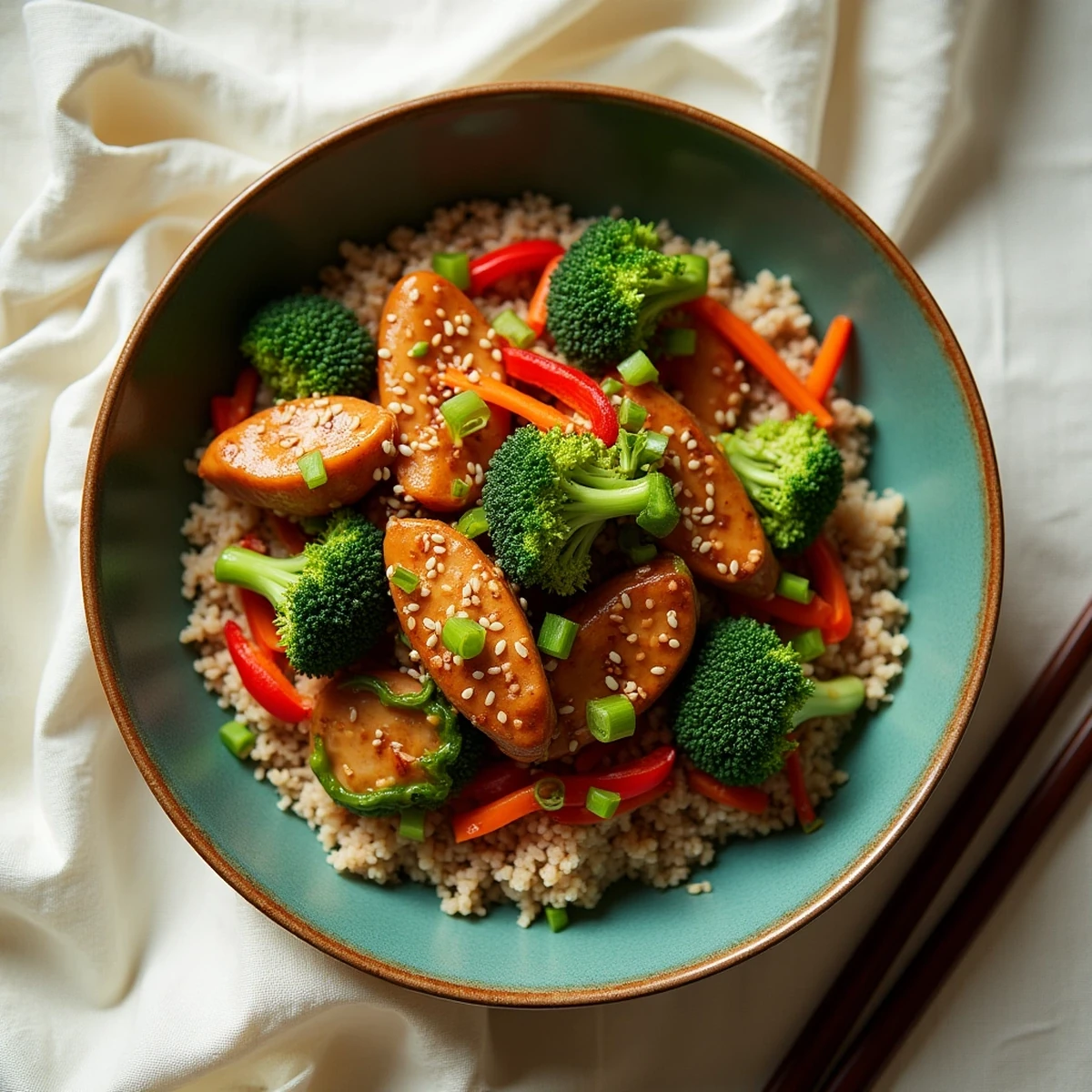
I made this on a Tuesday when my anxiety was sitting at about a 6 out of 10 and I had exactly 25 minutes before I needed to be on a call. That’s the honest origin story of this easy chicken stir fry. No grand inspiration, no farmers’ market haul — just a chicken breast in the fridge, a bag of frozen broccoli, and the knowledge that I needed to eat something real before my brain completely checked out.
Here’s the thing about a well-built stir fry: it’s doing more for your brain than you think. Chicken is one of the best dietary sources of tryptophan, the amino acid your body converts into serotonin. Broccoli and bok choy are loaded with folate and vitamin C, both of which play a role in neurotransmitter synthesis and reducing oxidative stress in the brain. The sesame oil brings in a small but meaningful dose of anti-inflammatory lignans. And the ginger — fresh ginger, please, not the powder — is a legitimately studied anti-inflammatory that also supports gut health, which is where most of your serotonin production happens anyway. The gut-brain axis is real, and this bowl is working with it.
My eomma would not recognize this dish. Her stir fries were simpler — gochugaru, garlic, whatever vegetables needed to be used up — and she made them in about eight minutes flat while also managing three other things on the stove. She’d probably look at my measured tablespoons of tamari and call it unnecessarily complicated. Then she’d eat two bowls. The sauce in this recipe is a riff on a Korean-inspired glaze I’ve been making for years: tamari for depth, a little honey for balance, fresh ginger and garlic for flavor and function, and a splash of rice vinegar to brighten everything up.
This is a weeknight dinner that takes less than 30 minutes, uses one pan, and leaves you feeling genuinely fed rather than just full. It’s not a cure for a hard week — nothing in a skillet is — but it’s a real, nourishing meal that your brain will thank you for. Serve it over brown rice for a steady serotonin boost, or over cauliflower rice if that’s what you have. Either way, let’s build it.
Ingredients
- 1.5 lbs boneless, skinless chicken breasts or thighs, sliced thin against the grain
- 2 tbsp avocado oil or neutral high-heat oil, divided
- 2 cups broccoli florets (fresh or frozen — both work)
- 1 cup bok choy, roughly chopped (leaves and stems)
- 1 large red bell pepper, sliced thin — rich in vitamin C, which supports serotonin synthesis
- 1 medium carrot, julienned or thinly sliced
- 4 cloves garlic, minced
- 1 tbsp fresh ginger, grated — anti-inflammatory and gut-supportive
- 2 green onions, sliced, for topping
- 1 tbsp sesame seeds, for topping
- 1 tsp toasted sesame oil, for finishing
- Cooked brown rice, for serving — complex carbs support steady serotonin production
- FOR THE SAUCE:
- 3 tbsp low-sodium tamari (or soy sauce)
- 1 tbsp rice vinegar
- 1 tbsp honey or maple syrup
- 1 tsp toasted sesame oil
- 1 tsp gochugaru or red pepper flakes (optional, but recommended)
- 1 tbsp cornstarch mixed with 2 tbsp cold water (slurry, to thicken)
- 1 tsp fresh ginger, grated
- 1 clove garlic, minced
Instructions
-
- Make the sauce first. In a small bowl or jar, whisk together the tamari, rice vinegar, honey, sesame oil, gochugaru, grated ginger, and minced garlic. Mix the cornstarch and cold water separately in a small cup until fully dissolved, then add it to the sauce and stir to combine. Set aside — having this ready before the heat goes on is the key to a stir fry that doesn’t stress you out.
-
- Prep your chicken. Slice it thin, about ¼ inch, cutting against the grain. Thinner slices cook faster and stay tender. Pat them dry with a paper towel — this helps them sear instead of steam, which is where the flavor lives.
-
- Heat a large skillet or wok over medium-high heat until it’s genuinely hot — you want to hear a sizzle the moment the oil hits the pan. Add 1 tablespoon of oil. Add the chicken in a single layer and resist the urge to move it for 2 minutes. Let it sear. Flip and cook another 1-2 minutes until cooked through. Remove the chicken to a plate and set aside.
-
- Add the remaining tablespoon of oil to the same pan. Add the carrots and cook for 2 minutes, stirring occasionally. They need the head start. Then add the broccoli and cook for another 2 minutes. If you’re using frozen broccoli, expect a little steam — that’s fine, just keep the heat up.
-
- Add the bok choy, red bell pepper, garlic, and fresh ginger all at once. Stir fry for 1-2 minutes until everything is bright and just tender but still has some bite. The folate in the bok choy is best preserved with shorter cooking times, so don’t overdo it here.
-
- Return the chicken to the pan. Pour the sauce over everything and toss to coat. The cornstarch slurry will thicken the sauce within about 60 seconds of hitting the heat. Keep tossing until every piece is glossy and coated.
-
- Remove from heat. Drizzle the teaspoon of finishing sesame oil over the top — this is for flavor and a small boost of beneficial lignans, and it matters more than you’d think. Taste and adjust salt or heat as needed.
-
- Serve over brown rice and top with sliced green onions and sesame seeds. Eat while it’s hot.
Nutrition
Tips
1. Slice your chicken straight from the freezer (half-frozen). This sounds counterintuitive, but partially frozen chicken is dramatically easier to slice thin and evenly. Pull it out of the freezer about 20 minutes before you start, and your knife will thank you. Thin, even slices mean even cooking and more surface area for the sauce to cling to.
2. Don’t crowd the pan — and don’t rush it. The biggest stir fry mistake is adding too much to the pan at once. If your pan isn’t large enough to hold everything in a relatively single layer, cook the chicken in two batches. Crowding drops the pan temperature and you end up steaming everything instead of searing it. The sear is where the flavor is, and on a hard week, you deserve the flavor.
3. Swap or add vegetables based on what’s in your fridge. Spinach, snap peas, mushrooms, zucchini, edamame — this recipe is a framework, not a strict formula. Spinach and mushrooms are especially worth adding if you want to boost the folate and B-vitamin content of this bowl. More dark leafy greens, more magnesium, more mood support. The sauce holds everything together regardless of what vegetables you use.